Case study · Instagram Shops · Meta
Commerce for small businesses, creators and brands.
The challenge
As small businesses braced for the pandemic, the world rapidly shifted to staying indoors, and online.
Meta took on the initiative to bring e-commerce to Facebook, Instagram and WhatsApp. I was hired to organize the disparate touchpoints across a disconnected ecosystem and launch the first mobile-centric merchant experience, rooted in empathy for millions of sellers worldwide.
I led a cross-functional team of designers, engineers, product managers and data scientists to develop a vision for a new seller journey. One of the most high-profile projects in the company, it shipped six months later and continues to scale today.
Research
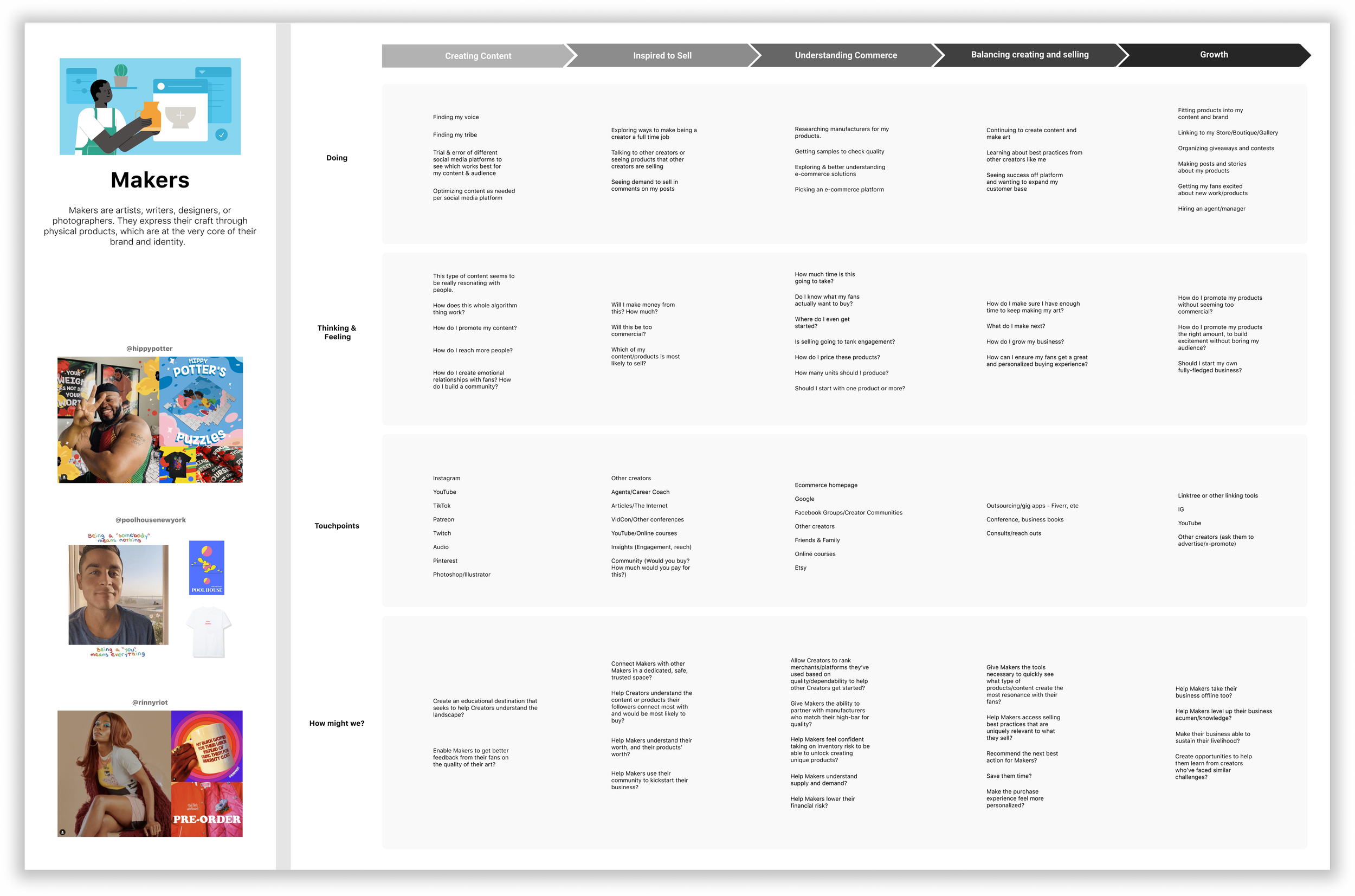
The seller journey
We spent time speaking with sellers at every stage of their journey to understand their pain points and aspirations. A clear mental framework emerged, held in place by experience principles gleaned from hours of interviews and aimed at the company's objectives for the year.
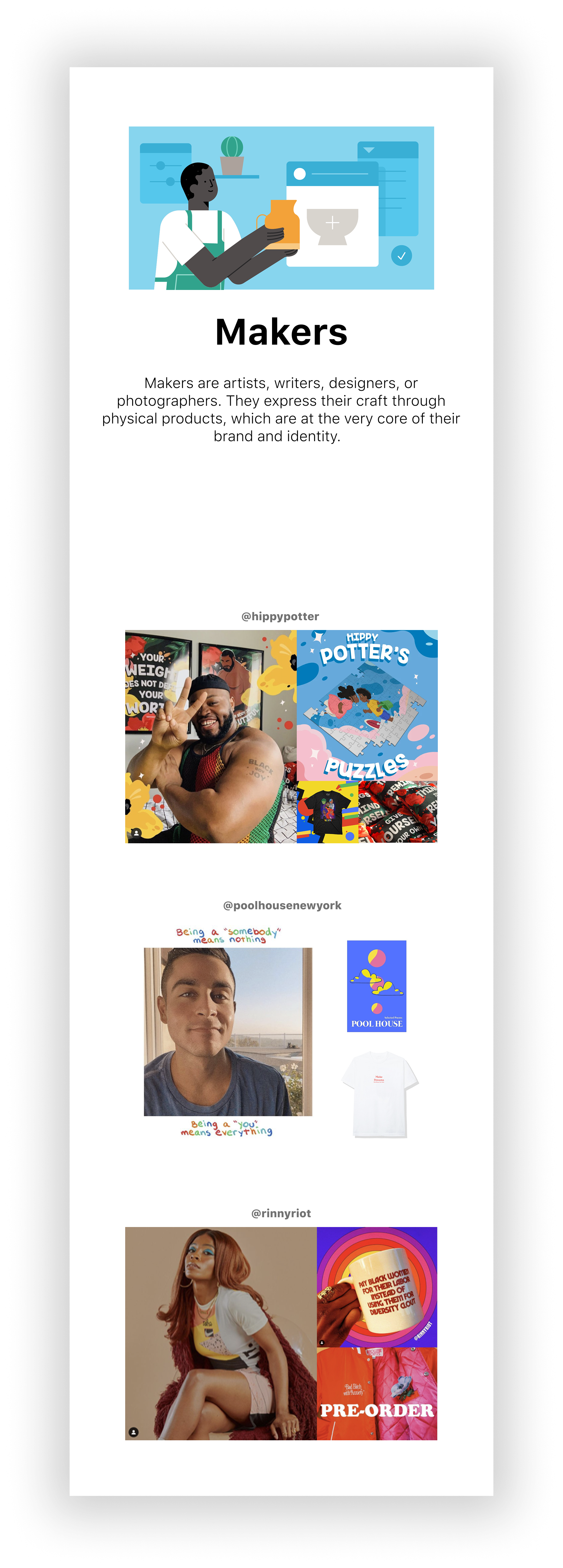
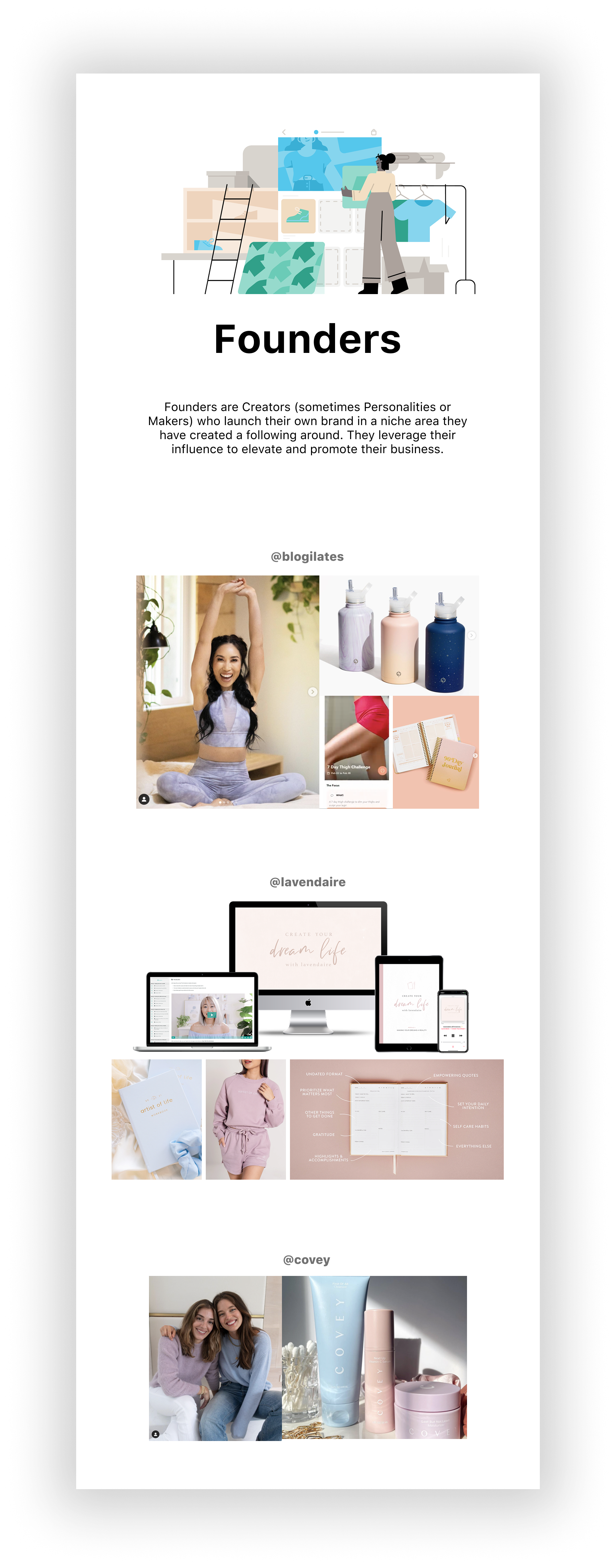
Three kinds of sellers
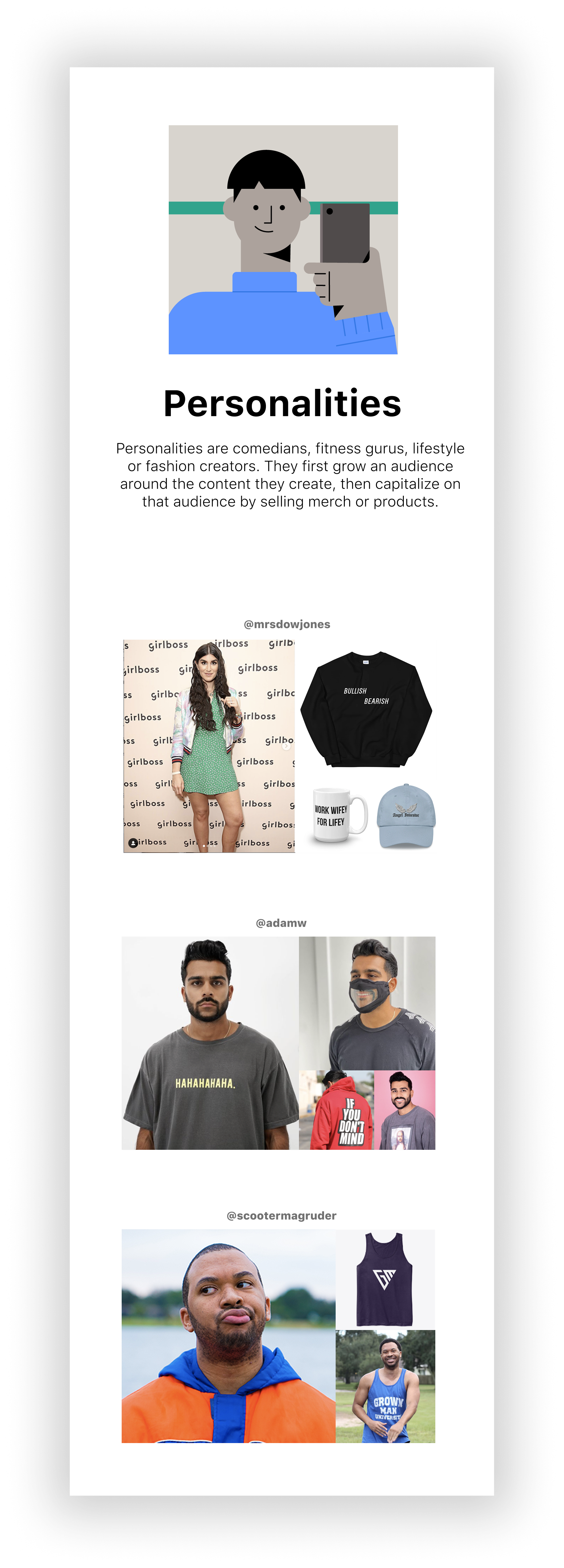
Most sellers on the platform fall into one of three buckets, each with distinct pain points, aspirations and needs.
From creation to community
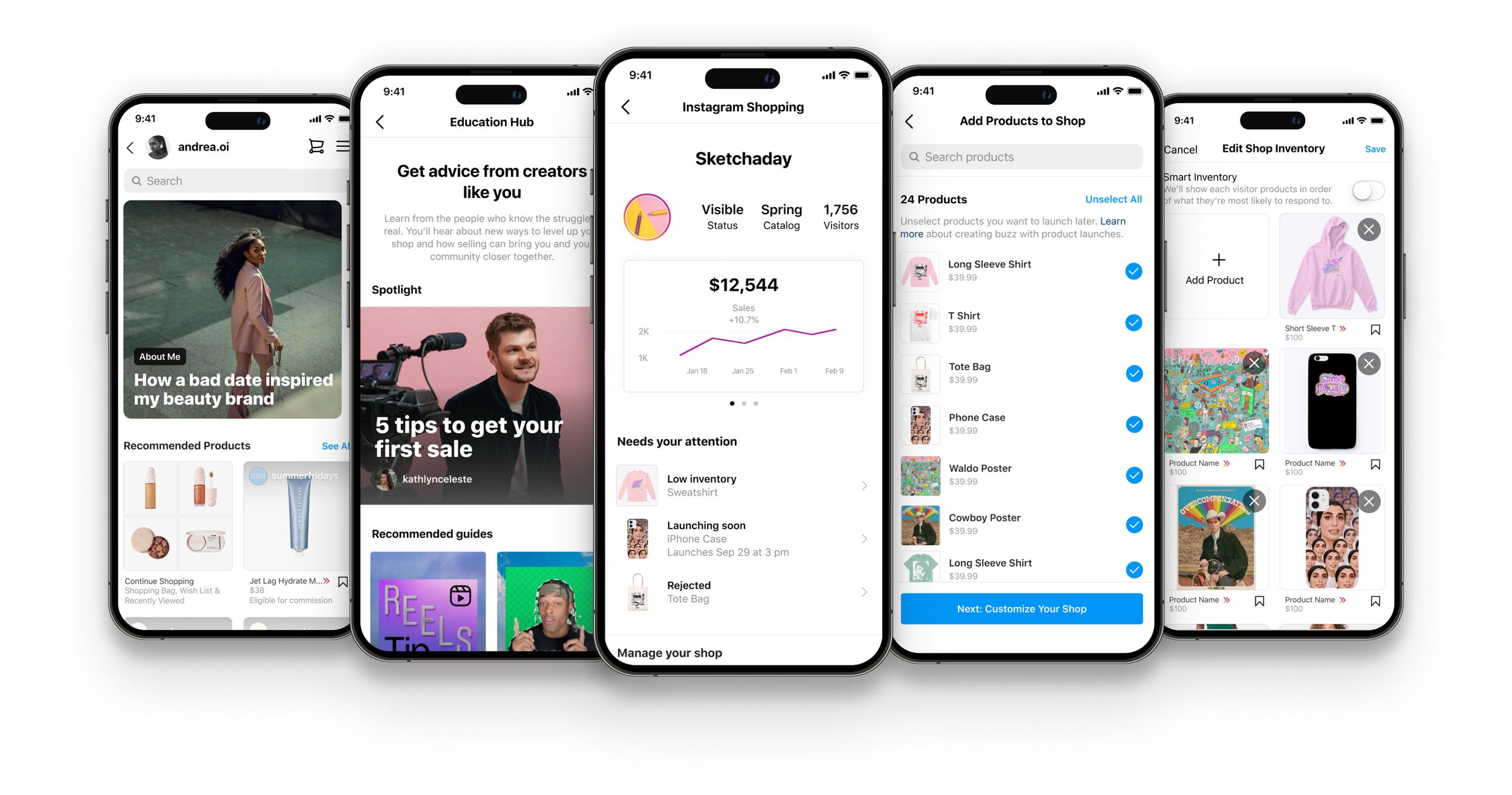
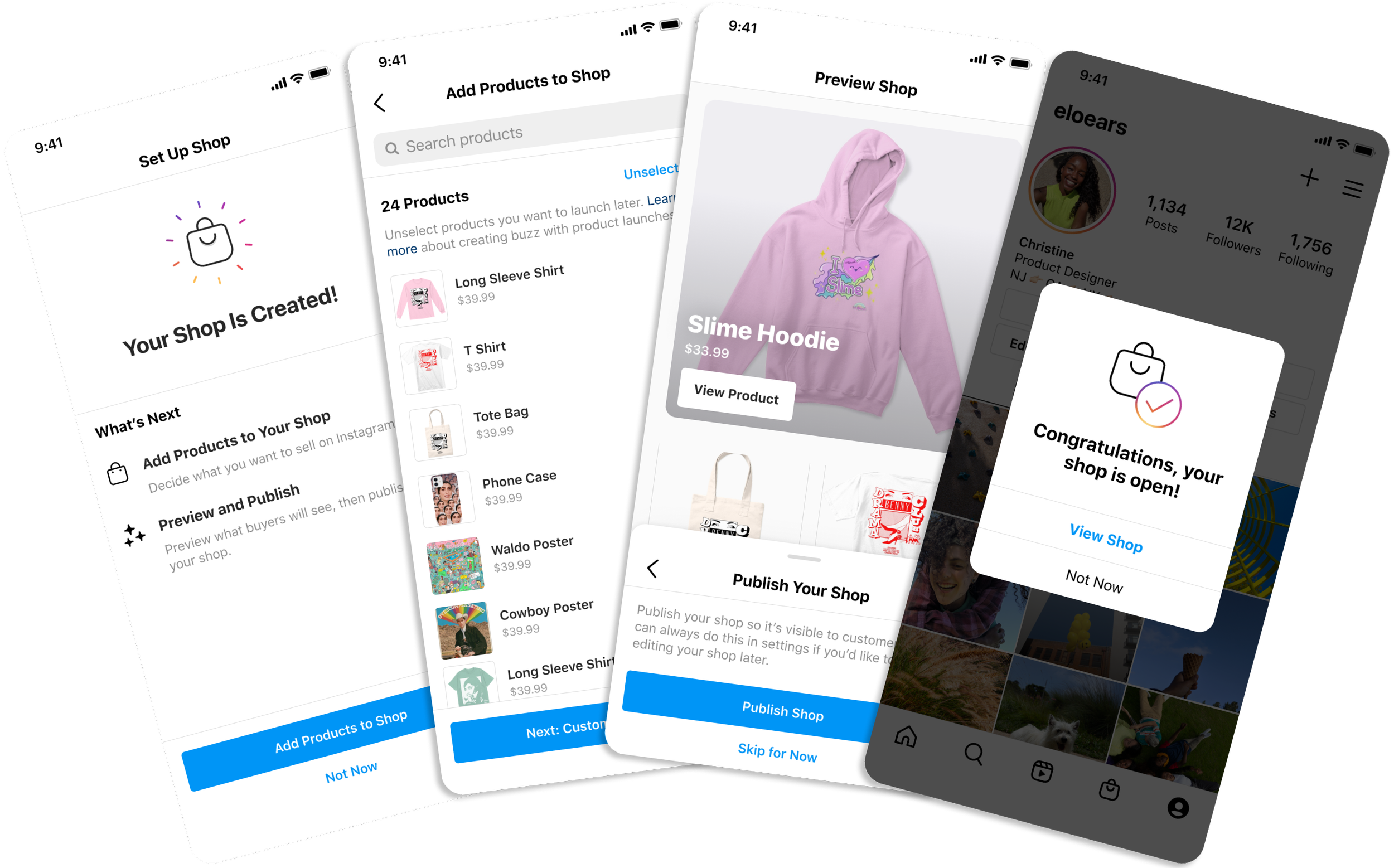
Simplicity of creation was a key factor. So we focused on leveraging a mix of existing mental models and intuitive interface components.
Leveraging Social
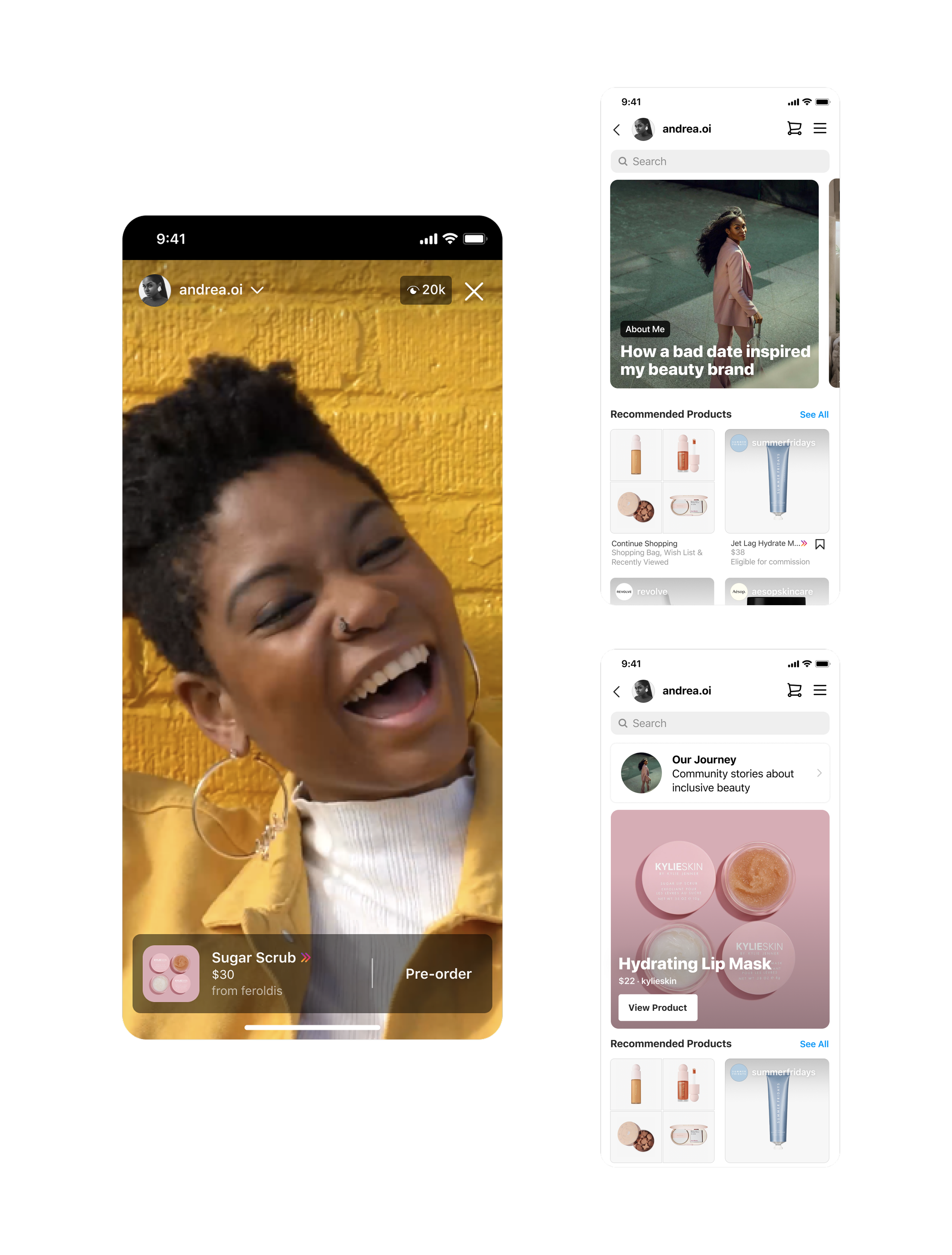
Stories of the people and brands behind the shop was key. So we created experiences that mixed products, narratives and commerce.
Organization & Education
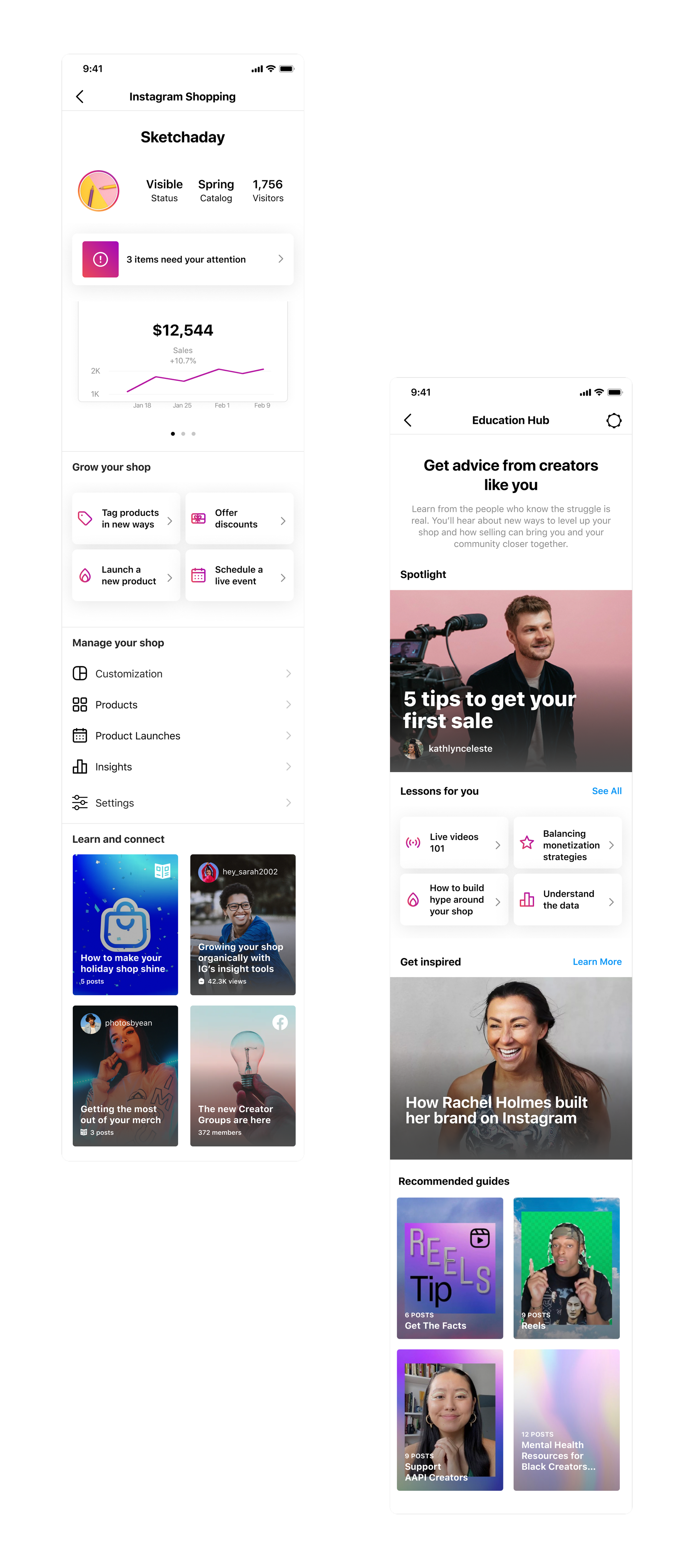
One insight from our research was that Creators seek out, and trust other Creators. So we focused the Education Hub around the principle of community.
At the same time, we created a Seller Dashboard that could provide simple shop management and contextual short cuts depending on the stage of the Creator’s Journey.

Next case study
Porsche × Zync